


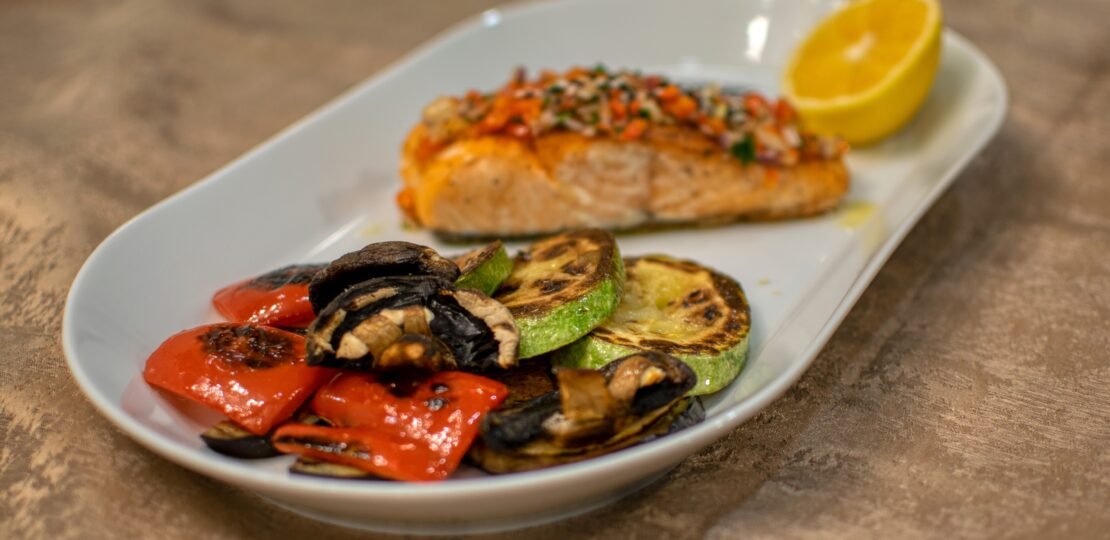
The fastest way to abandon a way of eating is to make it incompatible with dinner with your friends. I’ve watched women do beautifully for three weeks and then quit entirely after one restaurant meal made them feel like a burden.
So let’s be practical. You’re going out. Here’s how to eat in a way that serves you without turning the evening into a performance.
What’s actually different about restaurant food
Not the calories — the things that drive inflammation.
Industrial seed oils. Most kitchens cook in soybean, corn, or canola oil because it’s cheap and neutral. That’s the single biggest difference from your kitchen.
Sodium. Often several times what you’d use at home. Worth knowing if you notice swelling or your rings feeling tight the next day.
Hidden sugar. In dressings, marinades, glazes, and sauces — particularly anything described as balsamic, teriyaki, honey, or barbecue.
Portion size. Not a moral failing, just a fact. Restaurant portions are frequently two servings.
The goal isn’t a perfect meal. It’s a meal that leaves you feeling well enough to enjoy the evening and the next morning.
What to order, by cuisine
- Mediterranean and Greek — the easiest by a distance. Grilled fish or chicken, olive oil, vegetables, legumes. Order as you like.
- Mexican — fajitas without the tortillas, grilled meat or fish, guacamole, black beans, salsa. Skip the basket.
- Japanese — sashimi, edamame, miso, grilled fish. Ask for sauces on the side; teriyaki is mostly sugar.
- Italian — grilled protein and vegetables, olive oil and lemon rather than cream. Start with a salad so you’re not ordering hungry.
- Indian — tandoori dishes, dal, vegetable curries with a tomato base rather than cream.
- Steakhouse — genuinely straightforward. Protein, a green vegetable, a salad. Ask for the vegetables in olive oil or butter rather than the house blend.
Four things to ask for
All of these are ordinary requests. Nobody in the kitchen will think twice.
- “Could I have that grilled rather than fried?”
- “Dressing on the side, please.”
- “Could you cook it in olive oil or butter?”
- “Could I swap the fries for a salad or extra vegetables?”
What it isn’t
This isn’t about eating perfectly, and it certainly isn’t about announcing your dietary approach to the table. Nothing kills the pleasure of a shared meal faster.
It also isn’t about never having the bread, the pasta, or the dessert. One meal doesn’t undo a fortnight of good eating any more than one salad undoes a year of poor eating. What matters is what you do most of the time.
And it isn’t a reason to skip lunch beforehand. Arriving ravenous is the single most reliable way to eat in a way you’ll regret.
What actually helps
- Look at the menu before you go. Decide while you’re calm, not while a server waits.
- Eat something before you leave — a handful of nuts, a boiled egg. Small, but it changes what you order.
- Order first. You’re less likely to be swayed by the table.
- Water alongside anything else you’re drinking. Alternating is the difference between a good evening and a rough morning.
- Box half at the start if portions are enormous — you get lunch tomorrow rather than discomfort tonight.
If you have a diagnosed food allergy or coeliac disease, this is not the moment for a light touch. Tell your server plainly that it’s an allergy, not a preference, and ask about cross-contamination. Restaurants take those words seriously and are trained to act on them.
Seek emergency care immediately for swelling of the lips, tongue or throat, difficulty breathing, or a widespread rash after eating. Anaphylaxis can develop within minutes.
Start here
Next time you go out, do one thing: eat something small before you leave. Then order what you actually want. You’ll be surprised how differently that goes.
Cooking at home the rest of the week?
My free recipe book has ten anti-inflammatory recipes built for real, busy weeks.
RELATED POSTS
View all

5 Signs Your Body Is Begging for a Detox (And What to Do About It)
June 29, 2026 | by Carmela Levy


When Your Metabolism Works Against You: PCOS, Type 2 Diabetes & Metabolic Syndrome in Women
September 14, 2026 | by Carmela Levy