


Last week we called the gut the birthplace of everything. This week is the how-to. You don’t rebuild a healthy gut with one heroic cleanse — you build it the way you build any strong foundation: one ordinary, good-for-you bite at a time.
What it is
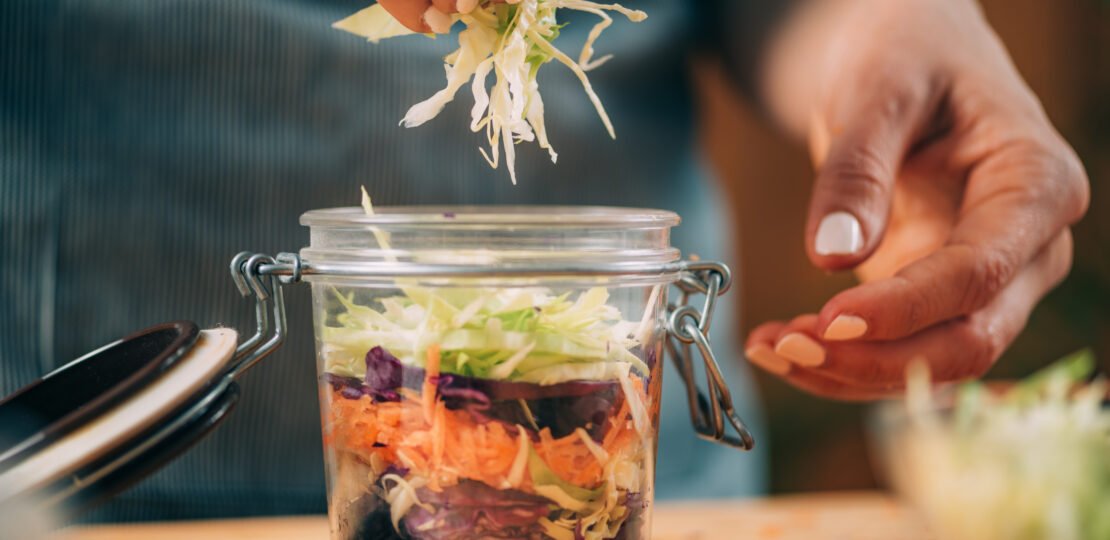
A “better gut” is a more diverse, better-fed community of microbes and a well-nourished gut lining. Three kinds of food do most of the work: prebiotic fiber (the food your microbes eat — onions, garlic, oats, beans, greens), fermented foods that add living microbes (yogurt with live cultures, kimchi, sauerkraut, miso), and colorful polyphenols (berries, olive oil, herbs, green tea). Eating a wide variety of plants — many aim for around 30 different plant foods a week — is associated with a more diverse microbiome and lower inflammation. (Cleveland Clinic; peer-reviewed nutrition reviews)
What it isn’t
It isn’t a single “superfood,” an expensive powder, or a punishing cleanse. Harsh detoxes and long restrictive fasts can actually starve the good microbes you’re trying to grow. And more probiotic pills are not automatically better — food-based diversity does the heavy lifting. Building a better gut is gentle and gradual by design.
When to act with urgency
Adding fiber and ferments should make you feel better over a few weeks, not worse. See your doctor if you have persistent bloating, cramping, or diarrhea despite gentle changes, and seek prompt care for blood in the stool, unexplained weight loss, or severe abdominal pain. New foods should never mask a symptom that needs real evaluation.
A gentle place to start
Add one prebiotic and one fermented food to your day and build from there. This week’s recipe does both at once — a warm, savory bowl that’s as friendly to your microbes as it is to your taste buds.
Sources
- Cleveland Clinic — Foods for Gut Health (health.clevelandclinic.org)
- Diet, the microbiome, and inflammation — National Library of Medicine reviews (pmc.ncbi.nlm.nih.gov)
This article is for general education and is not medical advice. Please talk with your own doctor about your health.
RELATED POSTS
View all


Thinning Hair? What Your Inflammation Radar Is Trying to Tell You
October 25, 2026 | by Carmela Levy

5 Signs Your Body Is Begging for a Detox (And What to Do About It)
June 29, 2026 | by Carmela Levy